
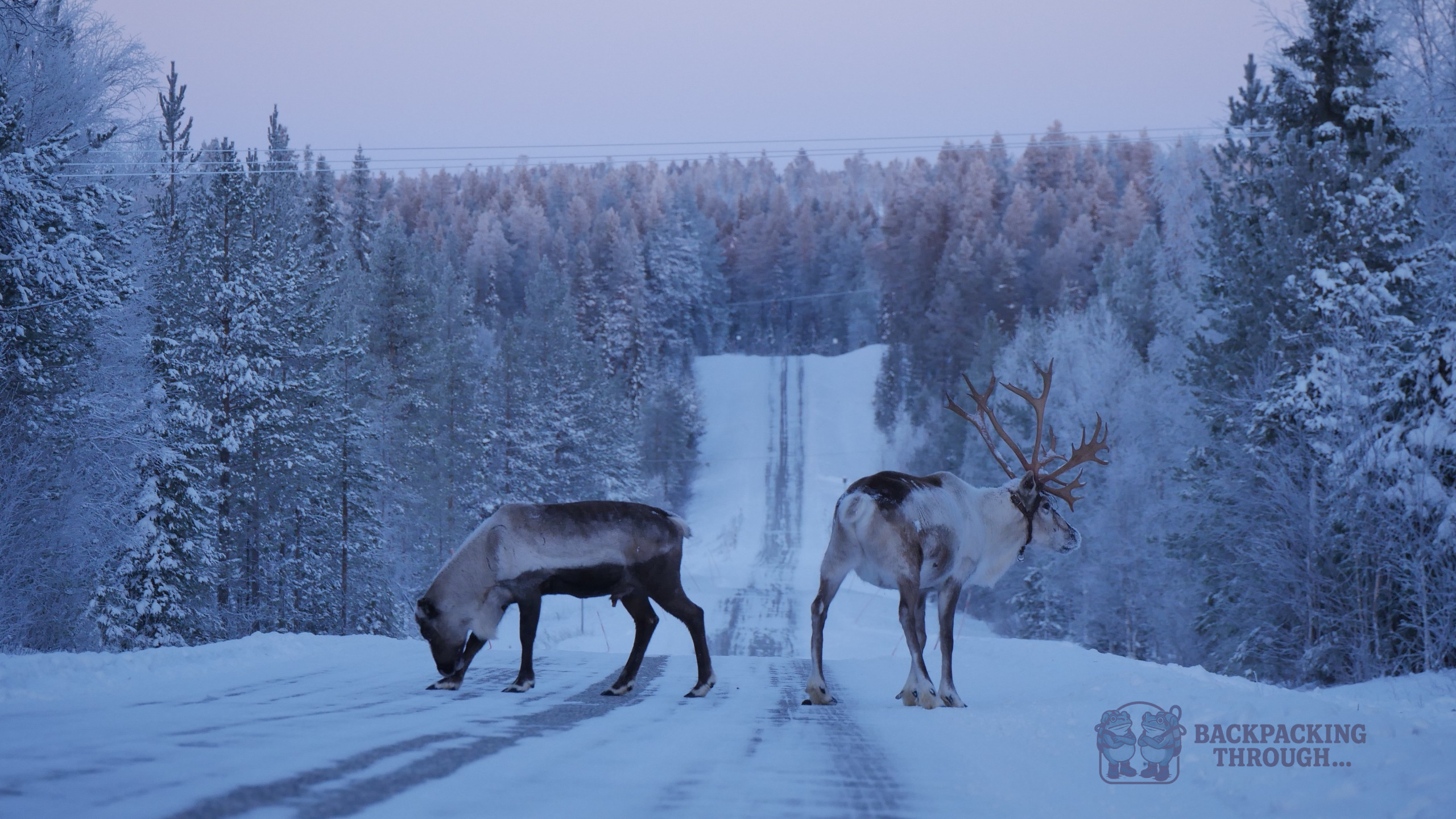
This winter we spent in Lapland, working for a company that runs husky sled tours. It involved many long hours working outdoors in temperatures of up to -35°C.
In this post, I’ll share how we managed to survive the cold, along with the tricks our guides use to endure hours and hours on the sled, and all the recommendations we give our guests on how to dress to protect themselves from the cold.
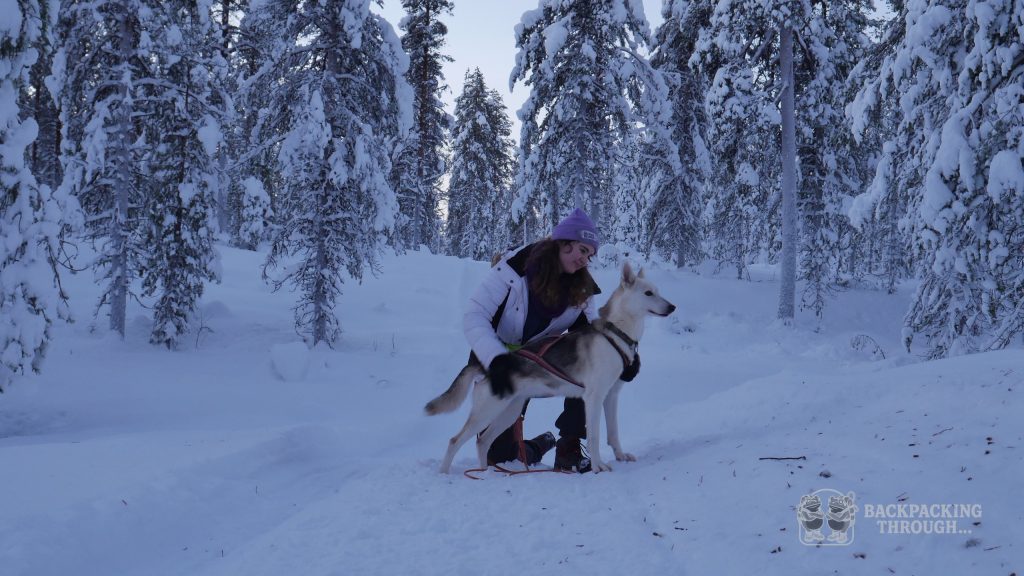
Torso and Legs: The 3-Layer Technique
A well-known technique for protecting the body in cold conditions is known as the 3-layer technique.
It is often said that when facing the cold, you should dress in many layers. This is quite accurate, but the material of these layers matters a lot. The layer that sits directly against your skin should not be the same as the middle layers or the outer layer; each of them serves a different purpose, and the order in which you put them on makes a big difference.
These layers are usually divided into three: the inner layer, the middle layer, and the outer layer, although sometimes, depending on the situation, more layers can be added. In our case, some of our guides double or even triple some of these layers to ensure they stay completely comfortable and can endure the whole day without risk of freezing.
First layer: inner layer
This layer will sit against your skin, and in some situations, while you’re moving, you might sweat, so we want to make sure it is breathable while still keeping you warm.
The most recommended material for this by far is wool, as it not only meets the above requirements but also has the quality of keeping you warm even when wet, so a little sweat won’t be too problematic. It is also antibacterial and doesn’t absorb odors, so I promise you can wear the same thermal shirt for several days of trekking without ending up smelling bad.
Ideally, you should have a thin wool first layer for both your shirt and pants, fitted to the body. Be careful—fitted but not tight; the last thing we want is clothing that squeezes your body, as this will hinder blood circulation, which is essential for keeping your body warm.
Many well-known thermal clothing brands nowadays guarantee ethical production that ensures animal welfare; you can look for labels such as RWS or Welfair. If you are still against using any animal products or your budget doesn’t allow for wool, synthetic materials like polyester can work quite well. Always avoid cotton at all costs, because unlike wool, even a little moisture will make it lose its insulating ability.
In general, one of these layers is enough. Although some of our more cold-sensitive guides use up to two inner layers if temperatures are expected to drop below -20ºC, and up to three if it’s going below -30ºC. Keep in mind that they spend many hours standing on the sled, almost stationary and facing the wind. Usually, if you’ll be walking or doing something more active, this would be too much.
Second layer: middle layer
This layer’s sole function is to insulate against the cold, so we’ll look for materials that are very insulating, but preferably lightweight and to some extent breathable as well. This is where fleece jackets and other polyester fabrics shine, although among the guides, thick wool sweaters are also widely used.
It is preferable that this layer, as well as the outer layer, fits slightly loose, since having air between layers of clothing helps insulate you from the cold.
You can use one or two of these layers depending on their thickness and how active you’re going to be.
“Two-and-a-half” layer
Some people prefer to replace the polyester middle layer with a down layer. Personally, I wouldn’t recommend it, because although down provides more insulation, it is very poorly breathable, which will make you sweat easily as soon as you move a little, and when you stop again, you’ll be in trouble.
One option that can be useful, especially if you’re going to be standing still for several hours, is to wear an extra down layer between the second and the outer layer, which you can take off if you’re going to be moving.
Often, as is the case with ski pants or an anorak, a single garment that acts as the outer layer may have down inside it, so you may already have both layers combined without even realizing it.
Third layer: outer layer
This is the layer that comes into direct contact with the cold, as well as any water and wind in the environment. The most important thing here is that it is completely waterproof, so that no external moisture can get inside. It also prevents the air trapped between your layers—warmed by your body heat—from escaping, helping to keep you warm. In addition, being waterproof will protect you from the wind.
In Lapland, despite being a very cold climate, it is also very dry, and wind is rare, which makes it much more bearable. Even so, if you’re going to spend a long time outdoors, you’ll probably end up stepping into snow at some point, falling into it, or having snow shaken off tree branches onto you. If you’re not wearing waterproof clothing, you’ll end up having a hard time.
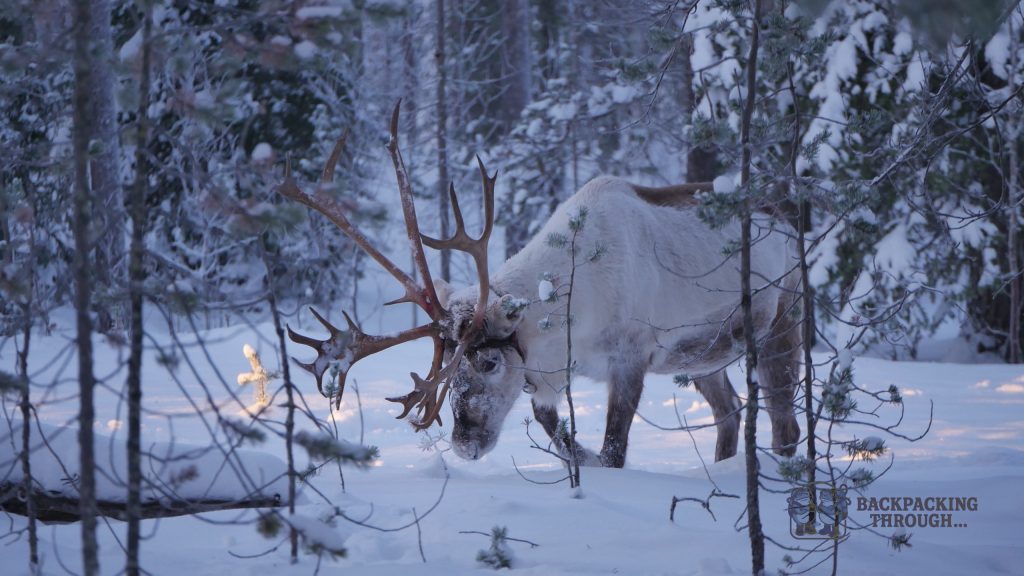
Hands, feet, and head.
Where problems really tend to arise is in the hands and feet. These are the areas most at risk of freezing. It’s quite common for some guests—or many of us (it’s happened to me)—to experience what are known as “frostbites,” where one or more fingers or toes freeze, turn white, and even after warming up again, don’t regain sensitivity for several days or weeks. Generally, the skin later starts to peel and eventually returns to normal, but I wouldn’t recommend the experience to anyone.
To prevent this, we’re going to keep them well covered. On the feet, we’ll wear at least two layers of socks, both rather thick and preferably made of wool, or if not, polyester or synthetic fabric (again, cotton should be avoided at all costs). We’ll put the thinner one on first, followed by the thicker one.
Just like I mentioned with the inner layer, they shouldn’t be tight. I have a pair of typical knee-high ski socks that are tight around the calf, and I haven’t used them since I arrived because, by being so tight, they restrict circulation to my feet—which is the main reason your feet end up getting cold.
A trick I learned here, and that we always recommend to guests, is to place a small plastic bag between the two socks. This, in addition to providing insulation, prevents external moisture from getting in and keeps your feet dry.
The shoes, as an outer layer, need to be very waterproof and very thick, with insulating material. The ones we have here have an inner foam lining. It’s good for them to have a very thick sole, and it’s preferable to leave a bit of air space between the sock and the shoe. However, if you’re going to be trekking, you should prioritize walking comfort.
If there’s snow, it’s important that they are very high and closed at the top so that snow doesn’t get into your shoes, although you can always use gaiters if yours aren’t that well-prepared. In any case, they should cover at least the ankle.
On the hands, we’ll use wool or polyester gloves as the first layer, followed by a very thick, waterproof glove. Some people here also use the plastic bag trick between these two gloves, although we usually don’t recommend it because it’s not very comfortable. It’s highly recommended (almost essential) to have a spare pair of the first wool gloves, since even though the second pair is waterproof, you often can’t handle things properly with them and take them off temporarily, so the first gloves almost always end up getting wet.
Finally, although your coat will likely have a waterproof hood, you should always wear a good, warm hat that keeps your forehead, head, and ears fully covered. In addition, a neck gaiter that you can pull up to your nose to protect your face and neck from the wind is also a good idea.
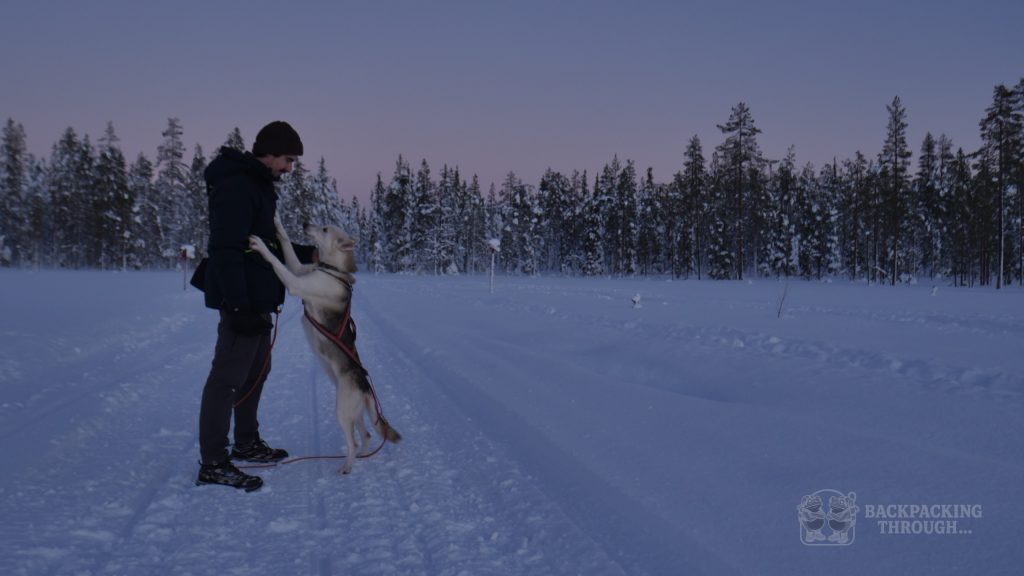
Additional tip: keep moving
If at any point the cold is getting to you, the best thing you can do is start running or do some good jumping jacks to get your blood circulating. This works much better than curling up in place and shivering from the cold.
Regarding the hands and feet, if you’re on the sled or in a situation that doesn’t allow much movement, you can still stimulate circulation by tensing all the muscles in the area. Exercises like gripping the sled as hard as you can and then relaxing, curling your toes and then stretching them as far as possible, etc., are very effective. Never leave your muscles inactive if you feel them getting cold, even if you’ve lost a lot of sensitivity and it’s difficult—this is actually when it’s most important.


Leave a Reply